
At a glance
| Upright | Grand | |
|---|---|---|
| Floor space | Stands against a wall; takes a strip of the room | Needs open floor on three sides plus room for the bench |
| Getting it in | Moves upright through doors, stairs and elevators | Legs and lyre come off and the body travels on its side on a board |
| Sound | Soundboard faces the wall; the room shapes the tone | Soundboard lies flat and projects up and out; can overwhelm a small room |
| Action | Hammers strike vertically and return by springs | Hammers fall back by gravity; many players find repeated notes easier |
| Neighbors | Sound goes into the wall behind it | Sound spreads into the room and down through the floor |
| Placement | Easier to keep off exterior walls and away from radiators | Needs a spot away from heat and sun on every side |
Choose upright if
space is tight, the route in has narrow turns, or you share a wall or floor with neighbors who notice sound.
Choose grand if
you have a large room with open floor, a building that can take the delivery and a player whose lessons call for a grand action.
The picture many people have of a piano at home is a small grand by a window. In a New York apartment, that picture runs into three questions: is there floor space for it, can it get through the building, and how will it sound in the room you have? An upright answers all three more easily. A grand gives something back in touch and tone, but it asks more of the apartment.
How the two are built
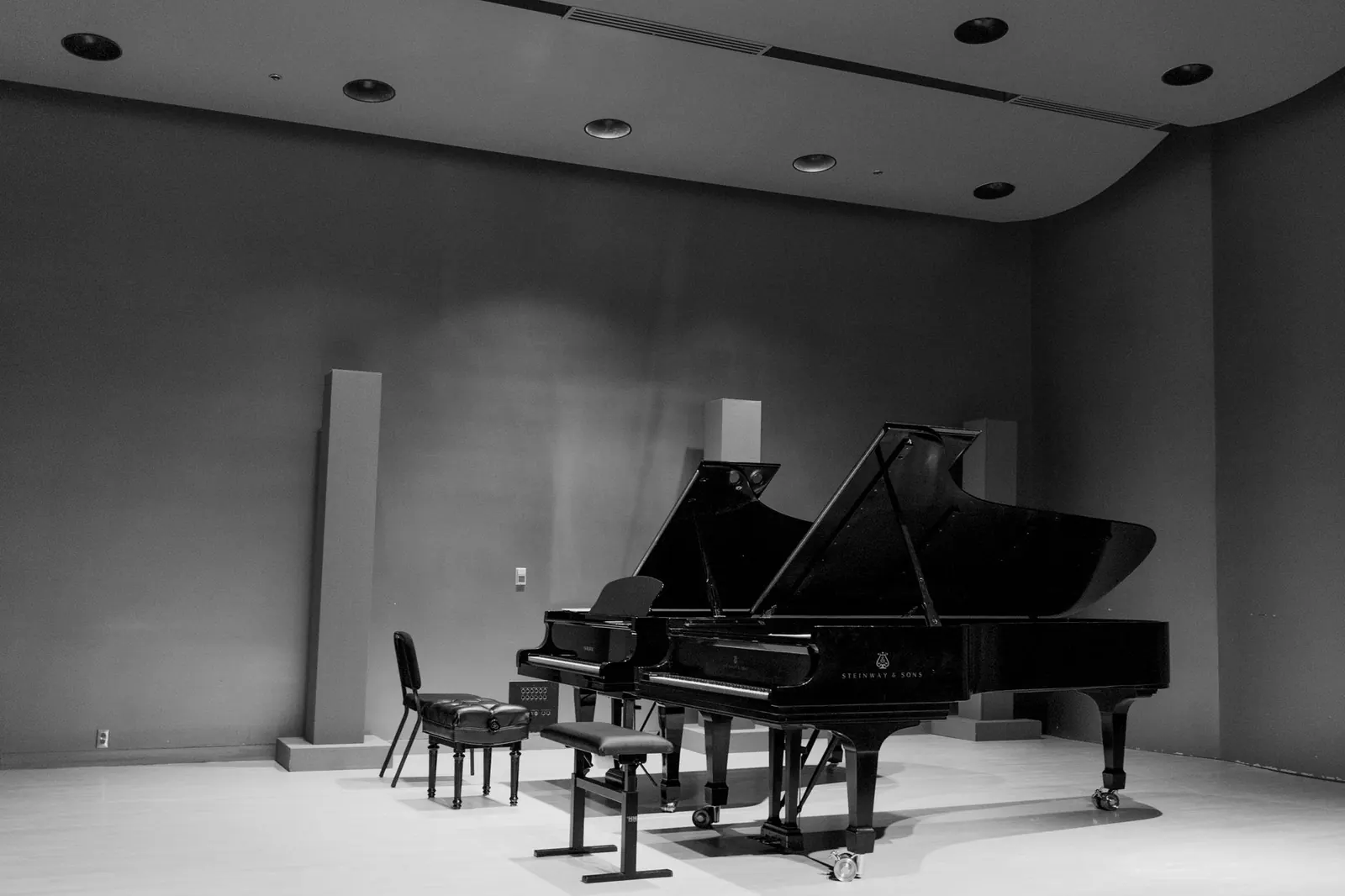
In an upright, the strings and soundboard stand vertically inside a tall case, and the hammers strike the strings from the front. Springs return the hammers after each note. In a grand, the strings and soundboard lie horizontally, the hammers strike from below and gravity brings them back down. That difference is why many teachers describe the grand action as more responsive when a note has to be repeated quickly, and why some advanced students want to practice on one.
The other difference is the case. An upright stands against a wall. A grand is a wide, curved shape that needs open floor around it, plus room for the bench and for the lid to open.
Measure the room first
Before thinking about sound, draw the piano’s footprint on the floor with painter’s tape. Use the depth and width from the specification of the model you are considering, and add the bench and the space a player needs to sit down and get up. Then walk around it. Many apartments that look big enough for a small grand lose a doorway, a window or a radiator to it.
Tip: Tape the footprint for a week before you buy. If the tape annoys you, the piano will too.
Then measure the way in
An upright travels standing up, like a very heavy bookcase, so the tightest point is usually the turn at a stair landing or the depth of the elevator. A grand is taken apart for moving: movers remove the legs, the pedal assembly and usually the lid, and carry the body on its straight side strapped to a board. That makes the height of doorways and the length of turns critical. A full checklist for measuring the route and talking to the building is in Will a Piano Fit in Your Apartment? Measuring the Route and the Rules.
Sound in a small room
A grand’s soundboard projects upward and outward, which is wonderful in a large room with high ceilings and can be overwhelming in a small one with hard floors and bare walls. An upright sends most of its sound toward the wall behind it, so the room and the wall shape what you hear. Either way, soft furnishings help. The city’s Department of Environmental Protection notes that hardwood floors reflect and amplify reverberant noise within a room and suggests carpeting with thick padding and heavy curtains to reduce it.
What the neighbors hear
Both shapes carry sound through the building, but in different ways. An upright against a shared wall sends sound straight into it, so it usually belongs on an inside wall that does not back onto a neighbor’s bedroom. A grand stands on three legs directly on the floor, so the people below may hear it more. Rugs, pads under the casters and sensible practice hours go a long way with either one. See Piano Noise and Neighbors in New York City for the rules and the practical options.
Heat and light
Whichever shape you choose, keep it away from radiators, heating vents and windows that get direct sun. The National Park Service’s guidance on wooden objects explains that a surface near a radiator or in the sun dries faster than the side away from it, and that uneven drying can warp boards. With an upright, finding one good wall is usually enough. A grand needs a spot where no side faces the heat.
When a grand makes sense
- The room has open floor well beyond the piano’s footprint.
- The building’s elevator or stairs can take a grand on its side, and the board allows the move.
- The player is advanced enough that the grand action matters for lessons or performance.
- You expect to stay long enough to justify the delivery and the cost of moving it out again.
When an upright is the better fit
- The room is small or has little wall-free floor.
- The route in has a tight stair turn or a small elevator.
- Someone lives directly below the room.
- The player is a beginner or intermediate student, or the family is not yet sure how much the piano will be used.
If neither shape feels right for the apartment, look again at the other big decision on this site: Acoustic or Digital Piano for a New York Apartment?. Some players keep a digital piano at home for daily practice and book a room with a grand when they need one.
Before you visit a showroom
Take your room measurements, a photo of the wall or corner you have in mind and the dimensions of the tightest point on the route in. A salesperson can then show you models that will actually fit, instead of the one that sounds best in a large showroom. The page Where To Buy lists showrooms in the city, using only the details each one publishes.