
Twenty-minute check
0 of 8 checked
A used piano can look perfect and hide a problem that costs more to fix than the piano is worth. It can also look tired and be a sound instrument that only needs tuning and cleaning. You cannot fully tell the difference without a technician, but you can do a first check yourself and rule out the obvious problems before you pay anyone to look.
How to use the checklist
Work through the list at the top of this page with the seller present. Take your time; a seller who hurries you is telling you something. If the piano fails several items, you can stop there. If it passes, arrange a technician’s inspection before you agree on a price.
Playing the keys
Play every key from bottom to top, once softly and once firmly. You are listening for keys that make no sound, keys that buzz or rattle, keys that stick down or come back slowly, and notes that sound very different from their neighbors. A piano that is simply out of tune will sound sour across the board; that is normal for an instrument that has not been tuned for a while and is not a reason to walk away on its own.
The pedals
Press each pedal and listen. The right pedal should let notes ring on; the left should soften or change the tone. Squeaks, knocks and pedals that do nothing are usually fixable, but add them to the list for the technician.
Inside the case
Ask the seller to open the lid, or the top and front panel of an upright. Use your phone’s flashlight.
- Strings. Light surface discoloration is common; heavy rust suggests damp storage.
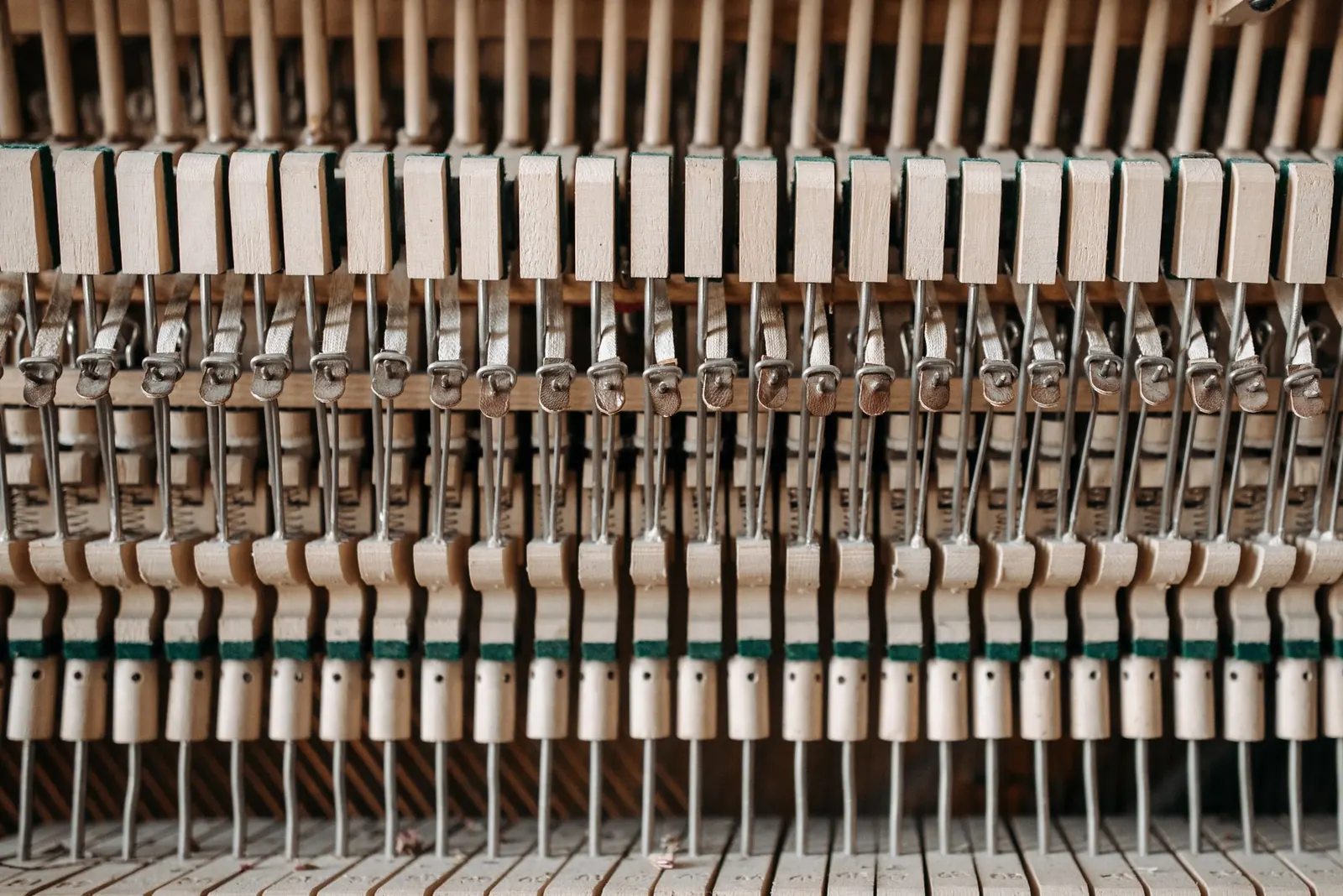
- Felts and hammers. Look for moth holes in the felts and hammers worn into deep grooves.
- Droppings or debris. A sign the piano has been stored somewhere it should not have been.
- Cracks. Visible cracks in the wood deserve a technician’s opinion.
Tip: Ask where the piano has lived. The National Park Service’s guidance on wooden objects warns that rapid drops in humidity can split wood and that a surface near a radiator dries faster than the side away from it. A piano that spent years next to a radiator deserves a closer look.
Signs that should end the visit
Some findings are reasons to walk away before paying anyone for an inspection, unless the price reflects a major repair and you want that project:
- Several dead or sticking keys spread across the keyboard, not just one or two.
- Obvious water damage, such as swollen wood, lifted veneer or stains inside the case.
- A seller who will not let you open the lid or play the piano.
- A story that changes: the age, the last tuning or where the piano has stood.
- Pressure to decide today because someone else is coming.
What only a technician can judge
Some of the most expensive problems are hard for a buyer to see. A technician can tell you whether the tuning pins still hold firmly, whether the soundboard and its supporting ribs are sound, how worn the action is and whether the piano can be tuned to standard pitch. Ask for a written summary and, if possible, a rough estimate of any work needed.
Paperwork and promises
The Federal Trade Commission’s consumer guidance explains that implied warranties under state law cover almost everything you buy, including the promise that a product will do what it is supposed to do, unless the seller gives written notice that there is no warranty or marks the product “as is,” where state law allows. It also advises getting any spoken promise, such as free repairs, in writing.
- From a store: ask for the written warranty before you buy, and read the posted refund policy.
- From a private seller: write a simple receipt with the price, date, serial number and both names.
- Either way: note what the seller told you about the piano’s history and repairs.
If you are buying from a store
New York’s General Business Law section 218-a requires stores to post their refund policy, including whether refunds apply to “as is” merchandise. If the piano is sold “as is,” the technician’s inspection is your only protection. More on buyer rights is in Your Rights When Buying a Piano in New York.
Before you agree on a price
Add up the price, the technician’s estimate for any work, the first tuning and the cost of moving the piano out of the seller’s building and into yours. Get quotes from licensed movers for both addresses; stairs at either end change the price. Our guide to Moving a Piano in New York City: Licenses, Estimates and Damage Claims explains what to ask. If the total is close to the price of a reconditioned piano from a dealer with a warranty, compare the two before you decide, using New or Used Piano: What Changes When You Buy in New York.