
Every October, New York apartments switch from open windows to clanking radiators, and acoustic pianos often start to drift out of tune. That is not bad luck. A piano is built from wood, glue and felt, all of which respond to the moisture in the air, and steam heat dries the air of a closed apartment. This guide explains what happens and what you can do about it without turning your living room into a museum.
The heat season, by law
The city’s Department of Housing Preservation and Development explains that building owners must provide heat from October 1 through May 31. Between 6 a.m. and 10 p.m., when the outside temperature falls below 55 degrees, the inside temperature must be at least 68 degrees Fahrenheit. Between 10 p.m. and 6 a.m., it must be at least 62 degrees regardless of the outside temperature. In many older buildings tenants cannot adjust the radiators much, so the apartment can run warm and dry for much of the heat season.
What dry air does to wood
The National Park Service’s museum handbook, in its appendix on caring for wooden objects, explains that wood shrinks and swells as relative humidity changes, and that the movement is uneven across different directions of the grain. Among the effects it describes:
- Cupping of wide boards when one side dries faster than the other, for example a surface in the sun or near a radiator.
- Checking, small splits along the grain, which can occur if relative humidity drops rapidly.
- Loose joints and brittle finishes when the air is very dry; the handbook warns that below 30 percent relative humidity glue may desiccate, joints may loosen and finishes become brittle.
A piano’s soundboard is a large, thin wooden panel, and its tuning pins are held by friction in a wooden block. When the wood moves, pitch moves with it. That is why technicians often talk about seasonal tuning changes.
What conservators aim for
The same handbook says the ideal relative humidity for wooden objects in most areas of the country is 50 percent, plus or minus 5 percent. Along the coast, 55 to 60 percent is acceptable, but above 70 percent mold and insects may become problems, glue may weaken and hardware may corrode. Its illustration of the stakes is memorable: an increase from 30 to 70 percent relative humidity can make wood expand as much as 2 percent across the grain, almost half an inch on a two-foot panel.
A home is not a museum, and you do not need to hit these numbers exactly. The handbook’s more useful advice for an apartment is about change: it warns against rapid shifts in humidity and against heating, air conditioning or humidifying a space on and off, and it says not to turn heat or air conditioning off at night.
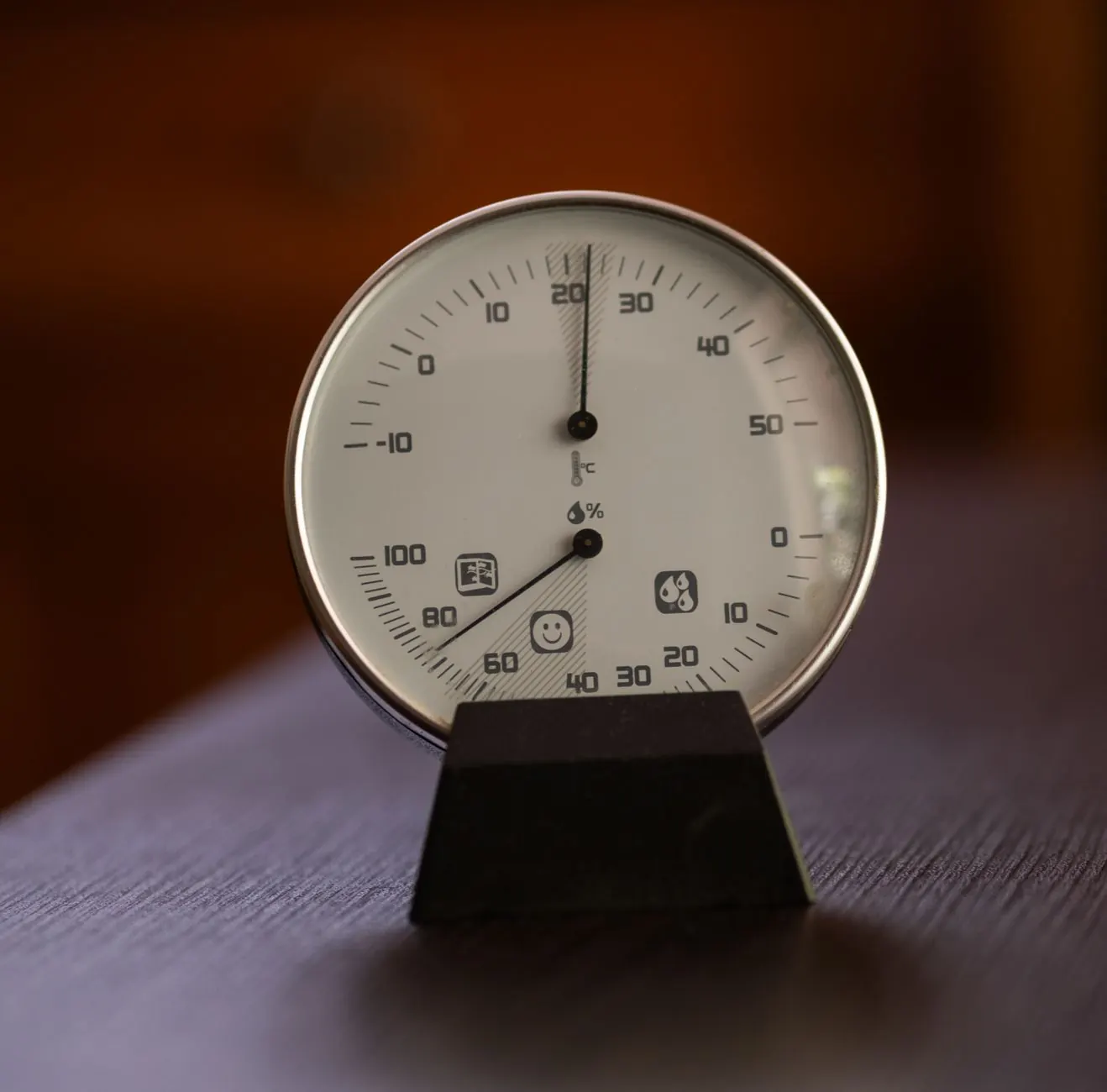
Tip: Buy an inexpensive hygrometer and put it near the piano, not across the room. A reading taken next to the radiator tells you nothing about the piano’s side of the room.
A simple winter routine
| When | What to do |
|---|---|
| Before October | Move the piano away from radiators and heating vents; have it tuned once the heat has been on for a few weeks |
| Early heat season | Watch the hygrometer; if the room reads very dry, add a humidifier and run it steadily |
| Midwinter | Keep the humidifier clean and running at a steady level; avoid switching it on and off |
| Spring | Expect the pitch to move again as the heat goes off and the windows open; plan the next tuning after the change settles |
Humidifiers and in-piano systems
A room humidifier near, but not pointed at, the piano is the simplest option. Keep it steady and clean, and never let mist settle on the instrument. Some technicians install climate control systems inside the piano that add or remove moisture as needed. If you are considering one, ask your technician whether it suits your instrument and your apartment.
Summer is part of the same story
When the heat goes off, New York summers can be humid, and air conditioning dries the air again. The handbook’s advice applies all year: steady conditions are better than swings. If you run air conditioning, try to keep it steady rather than switching it off for long hot stretches.
Sun and light
Sun is the other enemy of a piano in a bright apartment. The handbook notes that ultraviolet light fades and damages wood and finishes, most often from sunlight through unshaded windows. A sheer curtain or blind during the brightest hours protects the finish and keeps one side of the case from drying faster than the other.
When to call a technician
- Keys that stick or feel sluggish after a change of season.
- Buzzing or rattling that was not there before.
- Visible cracks in the case or soundboard.
- Tuning that will not hold between visits.
Placement is the other half of winter care; see Where to Put a Piano in a Small Apartment. And if you are still deciding what to buy, remember that a digital piano does not mind the radiators at all, as explained in Acoustic or Digital Piano for a New York Apartment?.