
At a glance
| Acoustic | Digital | |
|---|---|---|
| Sound | Strings and a wooden soundboard; fills the room and carries through floors and walls | Sampled or modeled sound through speakers or headphones; volume you control |
| Neighbors | Heard next door and below; practice hours and a rug under the piano matter | Headphones make early and late practice possible |
| Upkeep | Needs periodic tuning and, over the years, regulation of the action | No tuning; the electronics are the part that ages |
| Moving | Heavy; usually a job for piano movers, especially on stairs | Usually light enough to move without piano movers |
| Winter heat | Wood and glue react to dry radiator heat | Far less sensitive to humidity |
| Touch | A real hammer action under every key | Weighted keys imitate an action; the feel varies from model to model |
Choose acoustic if
the player is serious about tone and touch, you can agree on practice hours with the neighbors and the building can take the delivery.
Choose digital if
you share walls with light sleepers, need to practice late, move often or live in a walk-up where piano movers would be expensive.
For many New Yorkers this is the first decision and the one that settles most of the others. An acoustic piano is a large wooden instrument that makes its own sound. A digital piano plays recorded or modeled piano sound through speakers or headphones. In a house with a yard between you and the neighbors, the choice is mostly about sound and budget. In an apartment, it is also about the people on the other side of the floor, the stairs to your door and what winter heat does to wood.
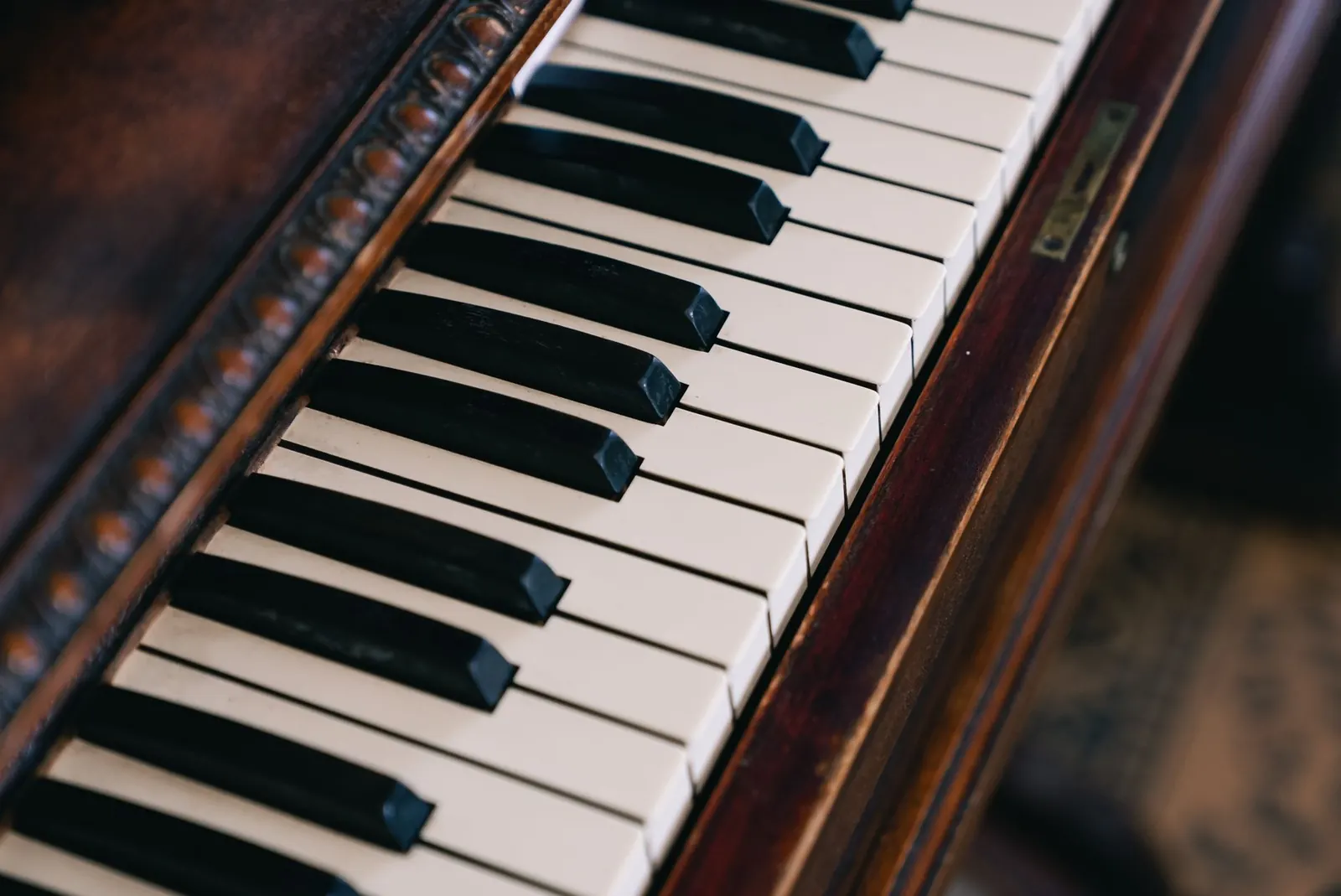
What you gain with an acoustic piano
An acoustic piano responds to the player in ways that are hard to copy. Pressing a key throws a felt hammer at a set of strings, and the sound comes from those strings and a large wooden soundboard. Teachers and serious students often prefer practicing on one because the touch and the range of loud and soft carry over to any piano they will play later, whether at a lesson, a recital or an audition.
There is also the simple fact that an acoustic piano is a piece of furniture that lasts. A well-kept instrument can serve a family for decades, and many people in the city buy one to keep, not to replace.
What you gain with a digital piano
The main advantage in an apartment is control over volume. With headphones, a digital piano is close to silent for the neighbors, apart from the thump of keys and pedals, which can still travel through a floor. That makes early morning or late evening practice realistic in a way it rarely is with an acoustic instrument.
- It does not need tuning, so there is no recurring tuning bill.
- It is usually much lighter, so moving it rarely requires piano movers.
- It is far less affected by the dry air of heating season.
- Many models can record, connect to a tablet for lessons and switch between different sounds.
Tip: If you choose a digital piano for the neighbors’ sake, put it on a thick rug or pad as well. Headphones stop the sound of the music, not the knock of keys and pedals on a hard floor.
The neighbor question
New York City’s noise code prohibits unreasonable noise, and complaints go through 311. In practice, friction over a piano can often be handled well before anyone calls the city: through the lease, the building’s house rules and a conversation in the hallway. Our guide to Piano Noise and Neighbors in New York City covers what the code says and what the city’s own noise guidance suggests for reducing sound inside a home.
If the player practices for long stretches, or at hours when the building is quiet, a digital piano removes most of the risk. If practice happens in the late afternoon and early evening and the floor is carpeted, an acoustic piano may be fine. Only you know your building and your neighbors.
Heat, humidity and tuning
Landlords in New York City must provide heat from October 1 through May 31, and radiator heat dries the air. The National Park Service’s guidance for caring for wooden objects warns that rapid drops in relative humidity can split wood and cause loose joints. An acoustic piano is mostly wood, glue and felt, which is why it tends to go out of tune as the seasons change and why placement matters. A digital piano simply does not care. For the details, see Caring for a Piano During New York’s Heat Season.
Moving day and moving out
Getting an acoustic upright into a fourth-floor walk-up is a job for professionals, and it has to be done again whenever you move. A digital piano can usually be boxed and moved with the rest of your furniture. If you rent and expect to move within a few years, include those future moves in your budget. Our guide to Moving a Piano in New York City: Licenses, Estimates and Damage Claims explains how movers are licensed in New York State and what they are liable for.
What about hybrid and silent pianos?
Between the two sit hybrid instruments, which combine a real piano action with digital sound, and acoustic pianos fitted with a silent system that stops the hammers before they reach the strings and sends the sound to headphones. Both try to give you acoustic touch with digital quiet. They are worth trying in a showroom, but check the weight and size of the model you like, because a silent acoustic is still an acoustic piano on moving day.
Questions to settle before you shop
- Who will play, how often and at what time of day?
- Is there an apartment directly below the room where the piano would go?
- What does the lease or the house rules say about instruments or quiet hours?
- How many flights of stairs or elevator trips stand between the street and your door?
- How long do you expect to stay in this apartment?
Your answers usually point clearly to one side of the table at the top of this page. If they do not, renting first is a reasonable way to find out, and Renting or Buying a Piano in NYC covers how that works.
Key takeaways
- An acoustic piano gives richer sound and touch but brings noise, tuning and moving costs.
- A digital piano with headphones is the safest choice when practice hours and thin floors are a concern.
- Winter heat affects acoustic pianos, not digital ones.
- Hybrid and silent pianos are a middle path, but a silent acoustic is still heavy to move.